What’s worth knowing about Knox Media Hub before heading to IBC?
IBC is no longer just about asking what technology can do. It is about finding what works, what delivers measurable value and how quickly it can fit into real operations. Here is what Knox Media Hub is bringing to Amsterdam.

IBC has always been a place to see what is new. But this year, the more useful question may be: what is genuinely ready to improve the way media teams work?
As IBC CEO Mike Crimp recently told TVBEurope, organisations are no longer coming to the show simply to ask what is possible. They want to understand what works, what delivers value and how quickly it can be adopted.
That is exactly the conversation we want to have in Amsterdam.
Knox Media Hub will be at IBC 2026, from 11–14 September at RAI Amsterdam, ready to show how broadcasters, content owners and distributors can simplify their media operations without forcing their business into a rigid technology model.
If you are planning to meet us, here is the useful context to have beforehand. 👇
One platform for the media supply chain, not another isolated tool
Knox Media Hub is a new-generation Media Asset Management and orchestration platform. It gives teams one browser-based environment in which to ingest, catalogue, transform, orchestrate and share content.
The objective is not to add another interface to an already crowded technology stack. It is to connect assets, metadata, storage, tools, workflows and partners so that operations can move with fewer manual handovers and less friction.
That matters because modern media operations rarely follow one simple route. The same title may need to reach live streams, OTT services, multiple streamers, social platforms, partners and international markets. Each with its own formats, metadata and delivery requirements. Supporting that complexity should not mean multiplying systems or headcount.
A new customer story: The Business Impact of Play Media’s Transformation
Ahead of IBC, we have published a new customer story examining how Belgian broadcaster Play Media redesigned its media supply chain around a scalable cloud backbone.
The project replaced a fragmented setup with a single operational environment and delivered concrete results:
Four systems consolidated into one cloud media backbone.
More than 100 provider workflows automated.
OTT publishing time reduced from around 45 minutes to 10–15 minutes.
More than 200 users supported through secure, self-service access.
The story is worth reading not simply as a technology implementation, but as a practical example of how a modern broadcaster supports linear, streaming and digital audiences while making better use of the same operational resources.
It also reflects how Knox Media Hub approaches delivery. As Bart Vanmeerbeeck, Broadcast Technology Manager at Play Media, explains: “This project felt like a genuine partnership rather than a traditional customer-vendor relationship.”
Hybrid workflows beyond all-or-nothing workflows
Cloud-first does not have to mean cloud-only.
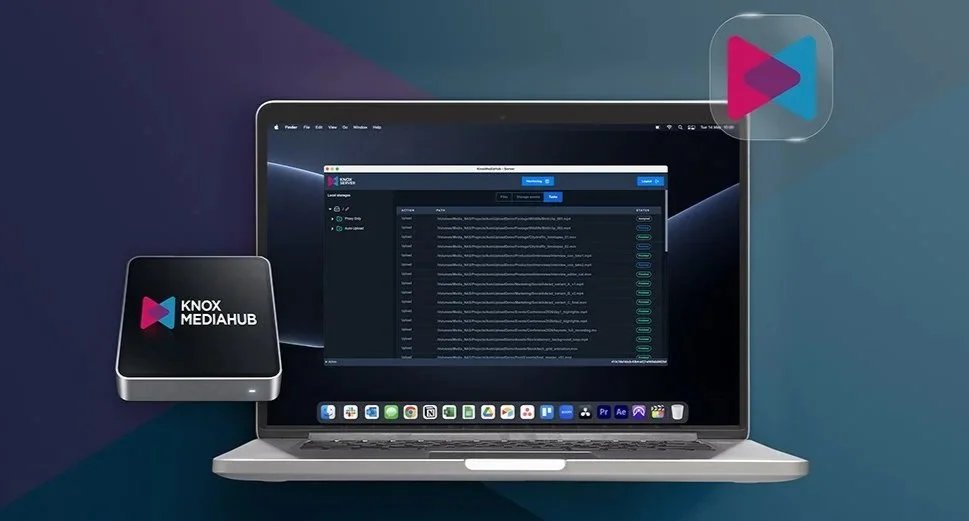
Media companies have valuable infrastructure, large archives and critical processes that cannot—or should not—move all at once. Knox Media Hub supports hybrid workflows that connect cloud services with on-premises storage and processing, while keeping the user experience and workflow control in one place.
At IBC, we can explore how this model applies to your own operation: what should remain on-premises, what can move to the cloud and how both environments can work together without creating another operational divide.
Metadata that does practical work
Metadata is only valuable when it helps people find, understand and move content.
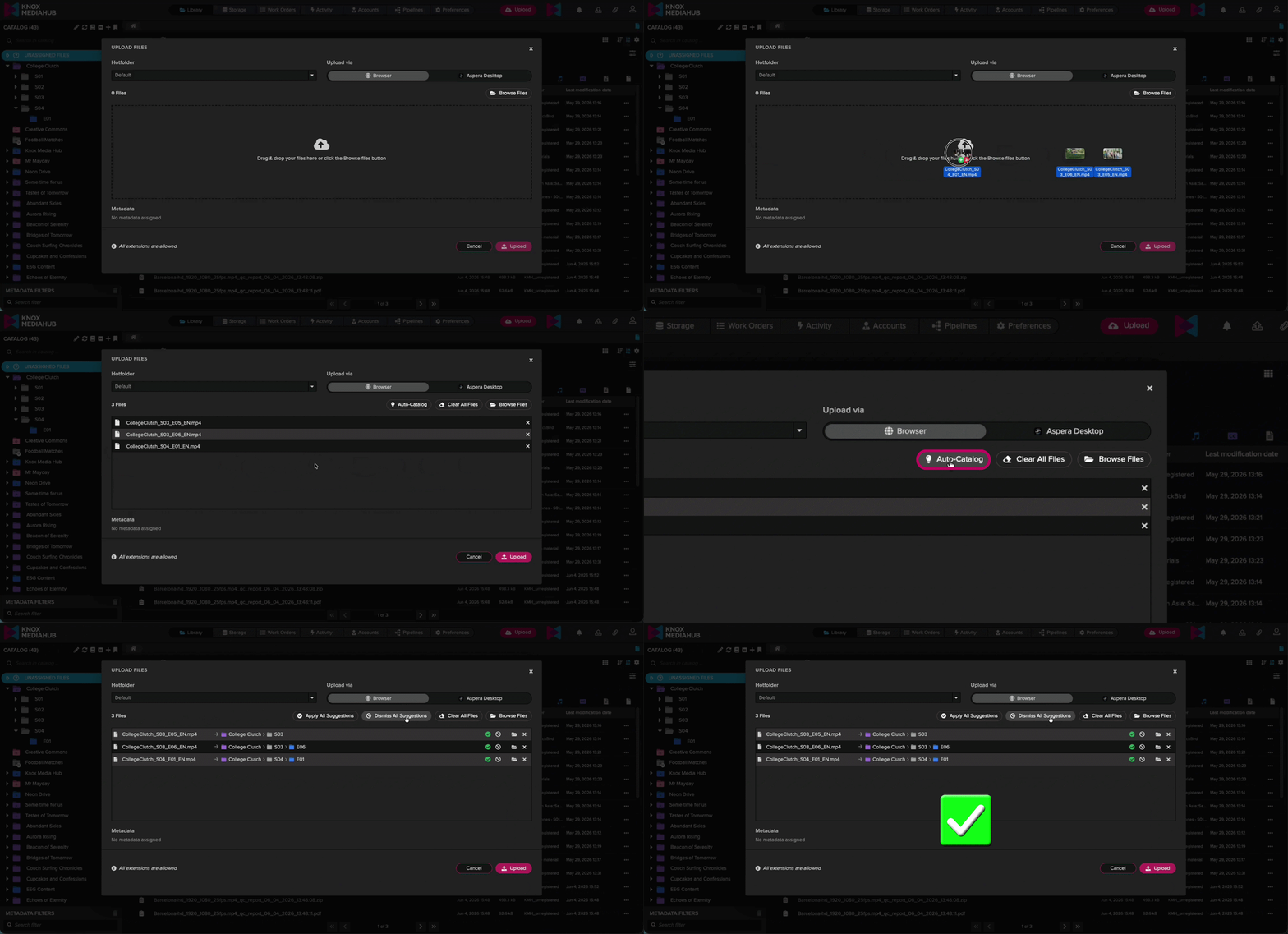
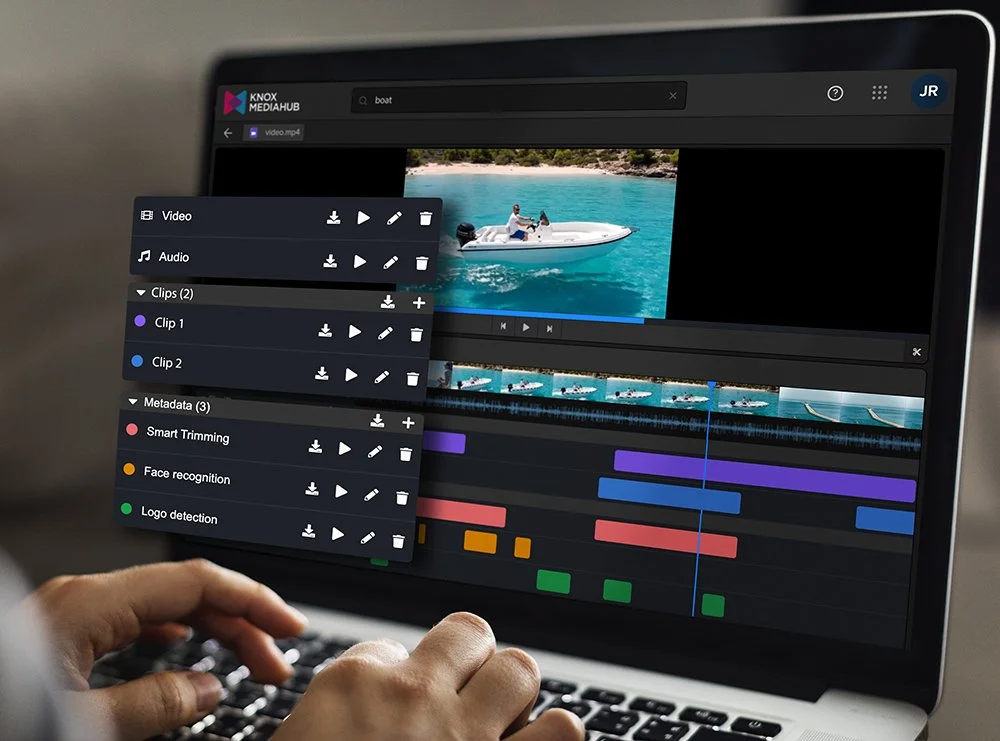
Knox Media Hub is extending its cataloguing and metadata capabilities to reduce the repetitive work involved in keeping media libraries usable. Auto-cataloguing can interpret filenames and available metadata to suggest the right destination, catalogue entry or placeholder match for newly uploaded files. Video Lab brings time-based metadata, segments and tracks into the same operational environment.
Together with metadata standardisation and compliance checks, these capabilities help teams spend less time tidying libraries and more time using them.
Orchestration built around real workflows
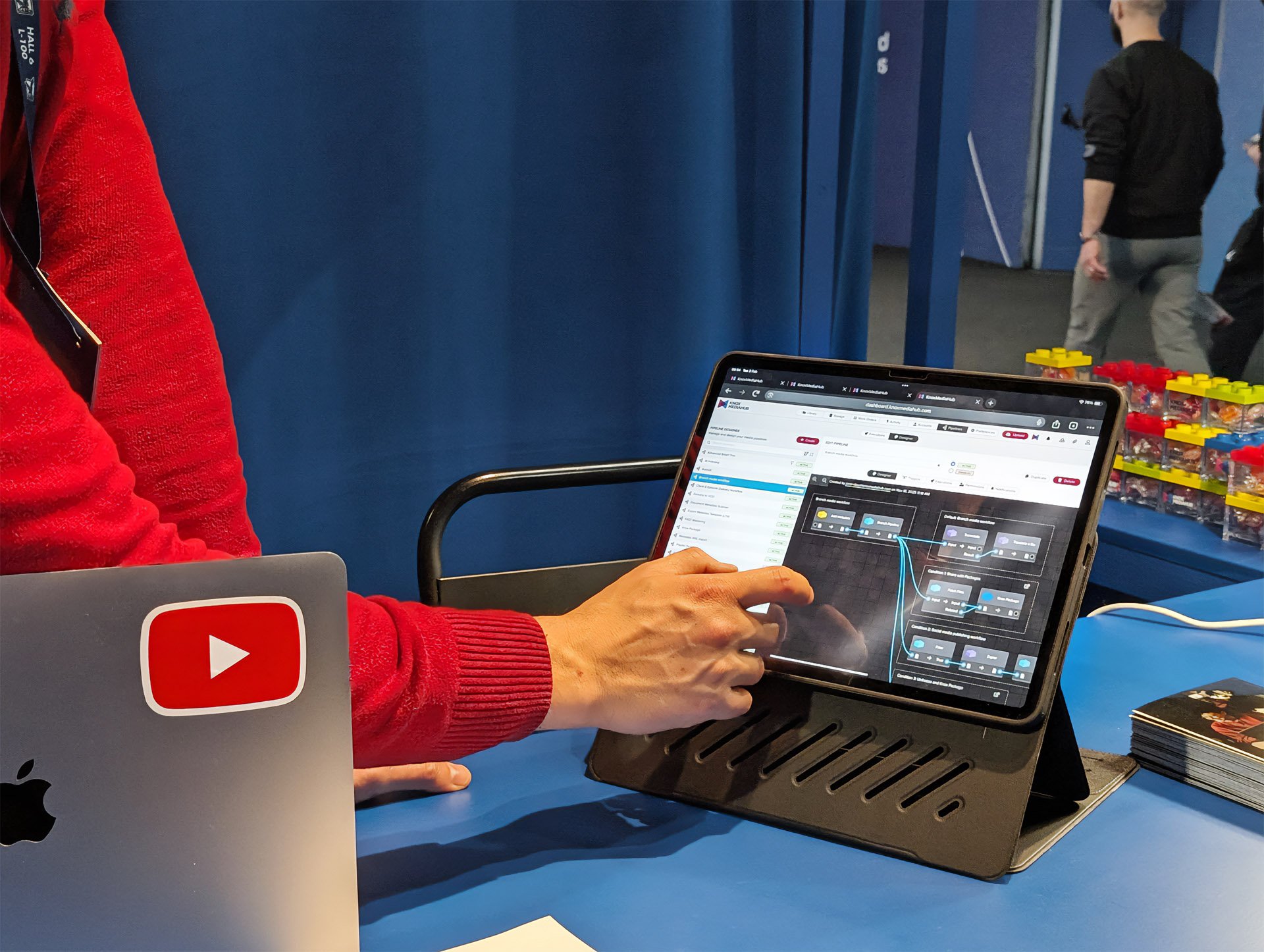
Complex media workflows become difficult to manage when logic is buried across disconnected tools, scripts and inboxes.
Knox Pipelines gives teams a visual, no-code way to design, automate and monitor those processes. Updated grouping and more flexible branching make it easier to represent real operational logic: validate metadata, run QC, transform media, stop or reroute failed assets, notify the right people and deliver compliant content to its destination.
The important part is not automation for its own sake. It is turning a process that depends on manual coordination into something visible, repeatable and easier to improve.
A new generation of self-service Portals
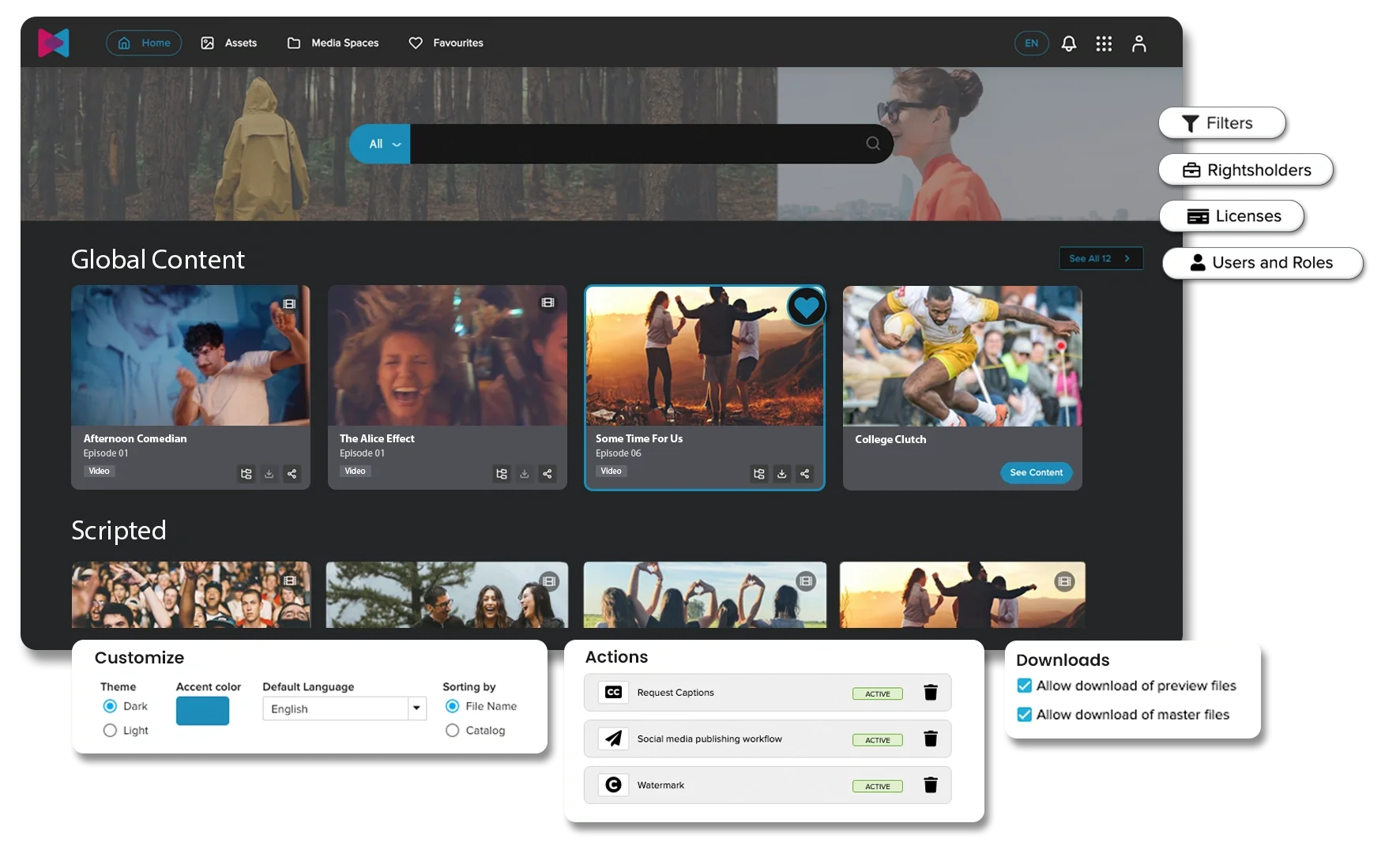
Distribution goes beyond a file leaving the library.
Knox Portals provide controlled, branded access for partners, customers and internal teams, supporting practical use cases such as screening, sharing and content delivery. They remain connected to the wider media operation, so self-service access does not mean losing visibility or control.
For teams supporting more destinations and stakeholders, that can remove a significant amount of repetitive request handling while giving users faster access to the content they need.
Ahead of IBC: Bring us the workflow that is causing trouble
There will be plenty of product news at IBC. Our recommendation is to arrive with something more useful than a feature checklist.
Bring us the awkward workflow. The manual handover. The process that almost works. The content route that becomes difficult at scale. We can put Knox Media Hub to the test against the way your organisation actually operates and show you a practical path through it.
You can also ask the team about our latest customer work, see the platform live and discuss where cloud, on-premises infrastructure, metadata, orchestration and self-service distribution fit into your roadmap.
💡
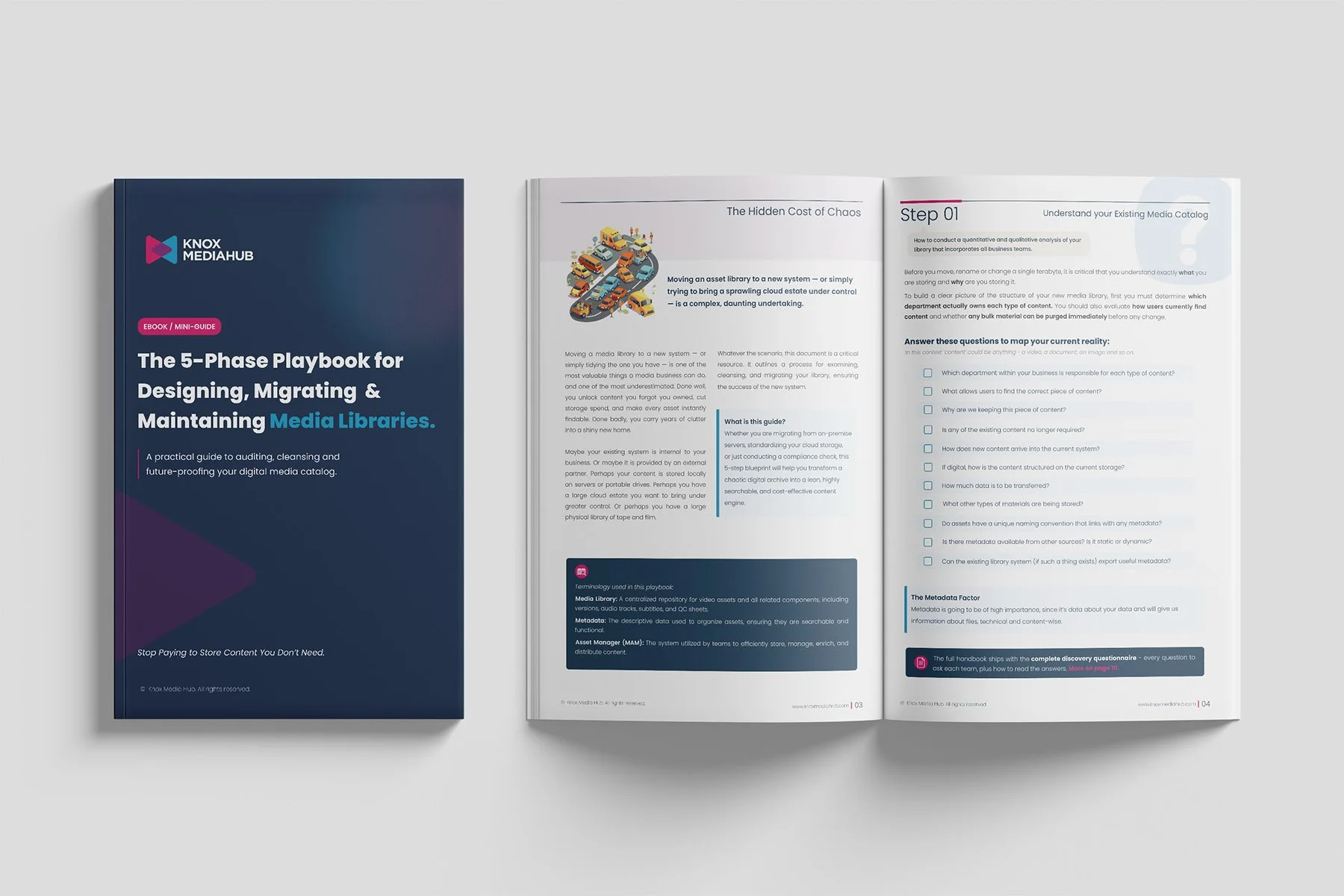
For organisations reviewing the foundations of their media library, we have also created a practical five-phase guide covering catalogue audits, retention, metadata and storage architecture, migration and long-term maintenance.