AV Broadcast Explained: What’s Driving the Enterprise Video Boom
The AV Broadcast market is on everyone's lips lately. In non-technical terms: Media technology no longer belongs solely to the Media & Entertainment industry. The adoption of broadcast-grade tools is accelerating across corporations, education, house of worship, and live events. But why is this happening now, and what are the key drivers?
The clear growth of AV Broadcast
The recent record-breaking growth of events like ISE (Integrated Systems Europe) highlights the robust health of the pro-AV segment. More importantly, it signals a massive convergence. According to AVIXA, AV Broadcast has now become the second-largest technology market within the ProAV sector (only behind Conferencing and Collaboration).
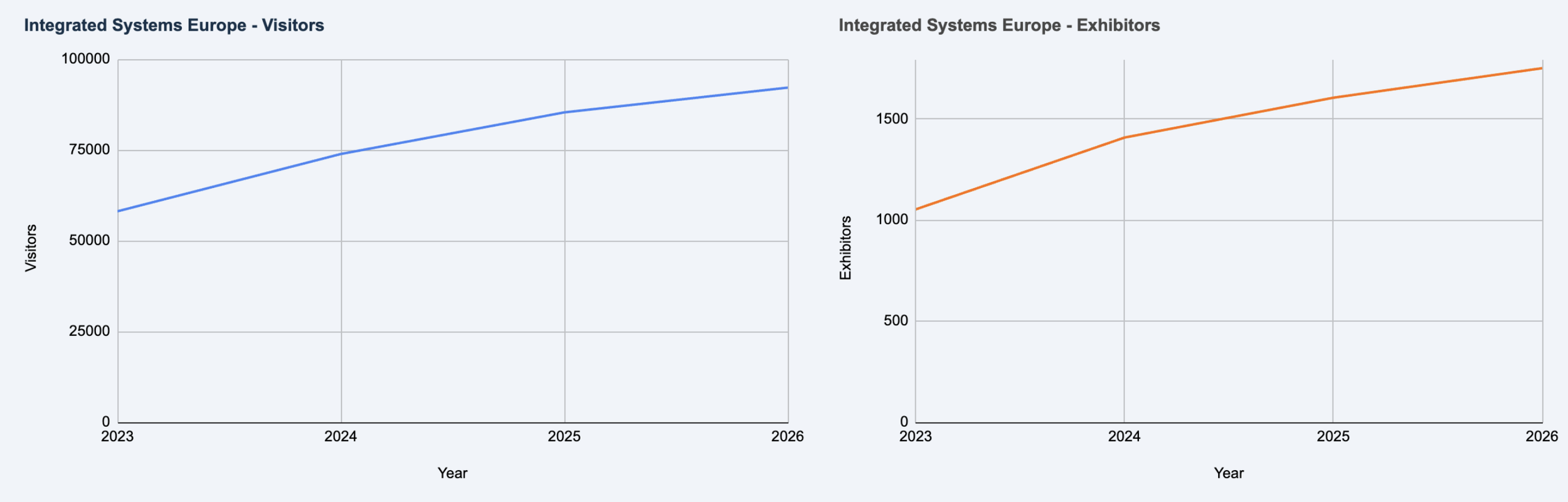
Source: https://www.iseurope.org/
This shift isn’t about traditional broadcasters buying better gear; it’s about banks, universities, churches, and global brands adopting tools that were once the exclusive domain of high-end television studios. It is the result of a "Creator Economy" mindset taking over professional communication.
Understanding the shift: what’s powering the Boom?
What specific forces have aligned to create this market trend? Let’s analyze the four pillars driving this transformation.
1. In today’s Attention Economy, video is the Universal Currency

One of the strongest forces driving AV broadcast growth is simple and has been evident for years: video has become the dominant format for communication and engagement.
Social Media has made video ubiquitous and the Creator Economy has set a high bar for quality. Audiences — whether they are customers, students, or employees—are video-savvy. They expect visual storytelling in broadcast-quality.
Buyers from corporate marketing teams to educational institutions expect video experiences that mirror what consumers see on social platforms like YouTube and TikTok. The generation entering the workforce today grew up with high-quality video, and they bring that expectation into their professional lives.
In short, organisations understand that to stand out in today’s attention economy, they must deliver compelling narratives, not just publish video.
This shift has been reinforced by:
A boom in enterprise video for internal communications, product marketing, training, and brand storytelling.
Corporate spaces — boardrooms and lecture halls — transforming into live production environments.
Growing audience demand for high production values across remote and hybrid touchpoints.
Video is no longer a one-to-many medium exclusive to broadcasters. It’s now many-to-many, on-demand, and interactive. Everyone is a player in the attention economy, where we battle for eyeballs.
2. The democratisation of video technology

AV Broadcast adoption has also been accelerated by the democratisation of Media tech.
Professional tools for video and audio are becoming more accessible and affordable. General-purpose technologies like Cloud and AI are lowering barriers to entry and allowing for high-end video creation at a lower cost.
Broadcast and AV systems are increasingly built on IP networks (using standards like SMPTE ST 2110), enabling video, audio and data to travel over standard Ethernet infrastructure. At the same time software-defined systems, Cloud platforms and AI are gaining traction. The result is greater scalability, flexibility, and compatibility with cloud-native workflows.
This shift enables:
AV and broadcast workflows managed through standard network infrastructure and protocols.
Remote production, centralised control rooms, and distributed content pipelines become feasible without traditional hardware constraints.
Real-time collaboration through cloud services and hybrid production models that weren’t possible a decade ago.
AI-assisted automation that lowers skill barriers for operators.
Decision-making power is gradually shifting from siloed engineering departments to marketing, creative, and editorial teams that prioritize usability and agility over technical complexity.
3. Video is now critical for companies & corporations in all industries
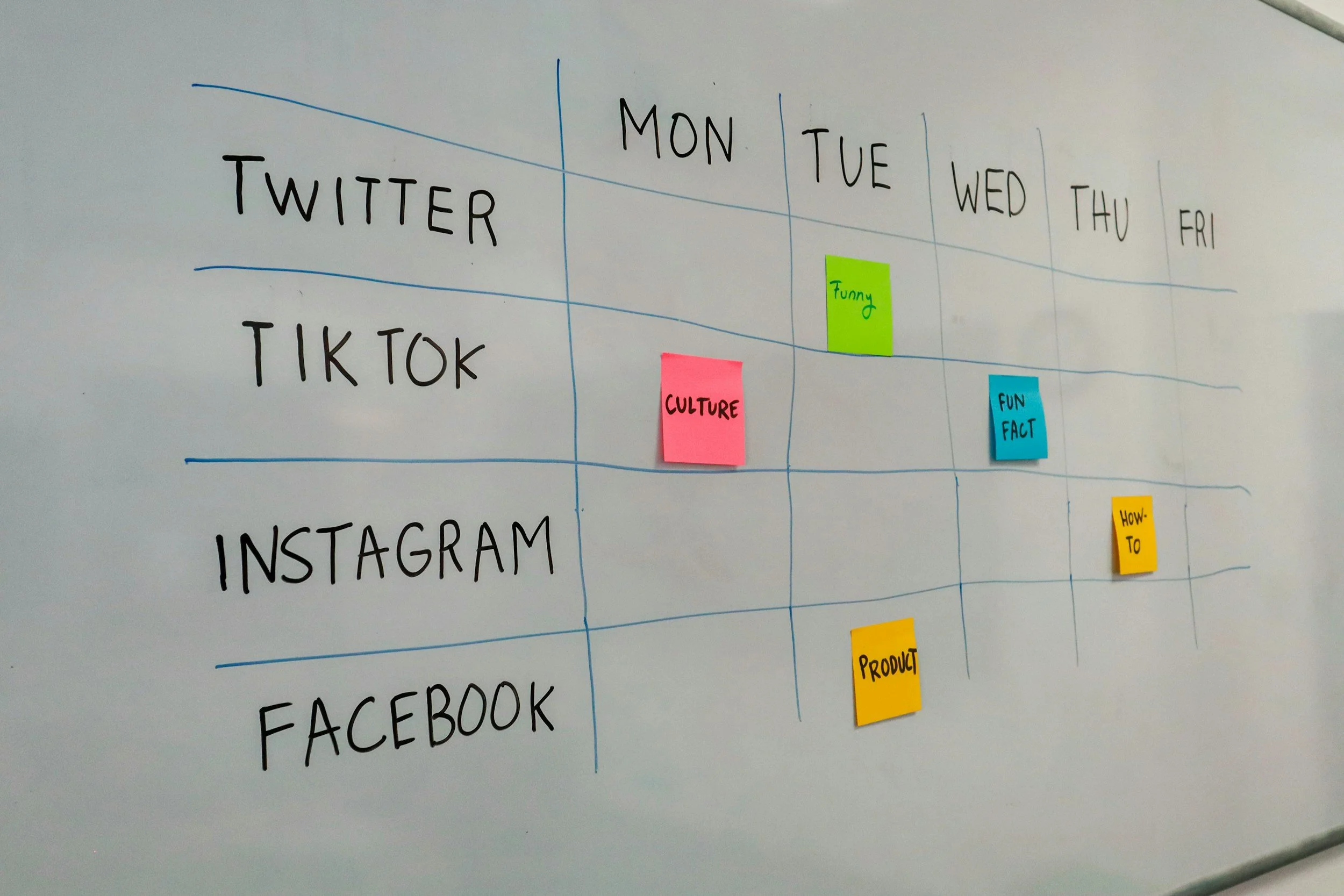
Given these trends, it is no surprise that video has moved from “nice-to-have” to strategic priority in corporate environments.
Across departments, video is now being used to engage customers, inform employees, captivate stakeholders, train global teams, and showcase brand stories. In today’s attention economy, video isn’t just another content format—it’s the currency of effective communication.
Numbers are striking:
Viewers retain 95% of a message when watched in video, making it the most effective communication format for internal and external stakeholders.
Corporate video usage has soared by over 800% in the last decade, touching every aspect of business, from marketing and PR to executive updates, investor relations, and global training initiatives.
Companies using video for internal communications report double employee engagement rates compared to typical messages, while 88% of marketers cite video as delivering a positive ROI.
Three out of four executives watch work-related videos at least once a week, underscoring video’s status as an essential, always-accessed business resource.
Sources: Forbes, Insivia, Forrester Research, Wyzowl (2024-2025)
4. The Experience Economy and hybrid engagement
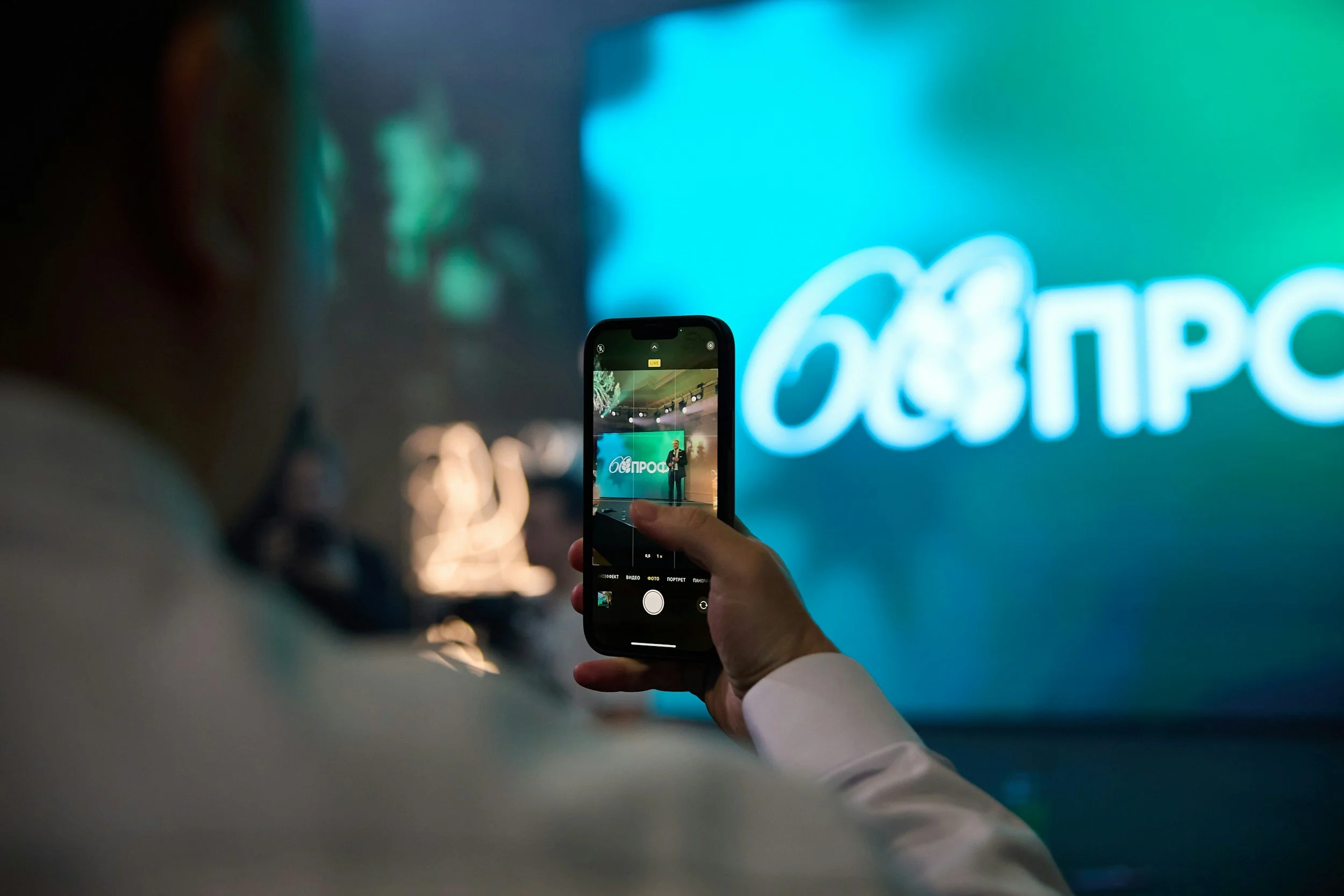
Finally, organisations are no longer just delivering content; they’re creating engagement experiences.
Whether it’s a museum unveiling an exhibit, a global brand launching a campaign, or a university hosting a hybrid graduation ceremony, audiences expect immersive and interactive engagement.
Hybrid events, live-streamed keynotes, and multi-channel digital campaigns all depend on robust AV broadcast infrastructure. Production quality directly influences perception, credibility, and impact.
The Hidden Challenge: Managing the Asset Flood

With this explosion in content creation comes a new headache: management. As corporations amass libraries of 4K footage, campaign assets, and board presentations, these archives become mission-critical yet increasingly complex to manage.
Brands building direct-to-consumer relationships are realising that the ability to locate, repurpose, and distribute content quickly is essential. However, many still struggle with scattered storage — assets lost in emails, hard drives, and disconnected servers— and rely on manual, inefficient workflows.
This is where the convergence of Broadcast and AV meets reality. Non-media organisations need the power of a media supply chain without the complexity. They need a Single Source of Truth.
At Knox Media Hub, we see this shift daily. Corporate marketing managers and IT directors are looking for solutions that:
Centralise assets in the cloud to eliminate fragmented storage.
Empower non-technical users in marketing, HR, and legal to manage assets without constant IT intervention.
Automate the heavy lifting, such as transcoding and tagging, using AI to make every asset instantly searchable.
The "AV Broadcast" revolution means that every organisation is now, effectively, a media company. The winners will be those who not only produce professional content but manage it with the efficiency of a top-tier broadcaster.
📚 Further reading:
🔗 Terms & Definitions: https://www.knoxmediahub.com/blog/proav-vs-av-broadcast-vs-broadcast-technology-vs-mediatech
🔗 More analysis about the enterprise video boom: https://www.avnation.tv/2025/06/03/from-broadcast-to-boardroom-enterprise-video-boom-creates-huge-opportunity-for-vendors-to-grow-revenues/
🔗 The PoV of an independent Media & Tech Analyst: https://lorenzozanni.substack.com/p/ise-2025-and-broadcastav-convergence
🔗 Challenges: https://www.avinteractive.com/news/av-broadcast/why-success-in-av-broadcast-requires-three-industry-shifts-08-10-2025/
🔗 ISE Broadcast AV Summit: https://www.iseurope.org/news/defining-av-broadcast-market
Want more Media Technology insights? Subscribe to our newsletter 📥