7 Myths About Cloud Media Asset Management
The media landscape is moving faster than ever. To keep up, many companies are looking toward Cloud Media Asset Management to handle their growing libraries. However, several misconceptions still linger, causing some to hesitate. These myths often revolve around security, cost, and control, but the reality of modern Cloud MAM is quite different.
In this article, we break down the seven biggest myths about managing your assets in the cloud and show you why a cloud-native approach is often the most secure and scalable choice for your media supply chain.
Table of Contents
Introduction to Cloud Media Asset Management
☁️ What is Cloud MAM?

The shift to remote work has significantly accelerated the adoption of Cloud technology.
In short, Cloud Media Asset Management (MAM) is a centralized system that allows organizations to manage video, audio, images, and other digital assets through cloud-based infrastructure.
Cloud Media Asset Management is changing how organizations store, manage, and distribute digital content. Instead of installing and maintaining complex systems on local hardware, Cloud Media Asset Management allows organizations to deploy and access MAM software through the cloud. This shift is especially important in today’s fast-paced digital ecosystem where remote work and global collaboration are the norm.
Why It Matters in Modern Media Workflows
The rise of streaming platforms, social media, and digital marketing has increased the demand for faster content production and distribution. Cloud MAM enables:
Real-time collaboration
Remote access to media assets
Faster content retrieval
Centralized metadata management
Seamless integration with editing and publishing tools
Without Cloud Media Asset Management, companies risk falling behind in an increasingly competitive landscape.
1️⃣
Myth #1: Cloud Media Asset Management is Too Expensive
One of the most common myths about Cloud Media Asset Management is that it’s costly. In reality, traditional on-premise systems often require:
High upfront hardware investments
Ongoing maintenance costs (the dreaded hardware refresh cycle)
Dedicated IT teams
Cloud MAM eliminates many of these expenses by offering subscription-based pricing models. When you look at the Total Cost of Ownership (TCO), the cloud wins on efficiency (Shift the focus from OpEx vs. CapEx )
ROI and Long-Term Savings
Organizations often see a strong return on Cloud Media Asset Management investment through:
Reduced infrastructure costs
Lower downtime
Improved productivity
Better Cost Allocation
Over time, Cloud Media Asset Management proves to be more cost-effective than legacy systems.
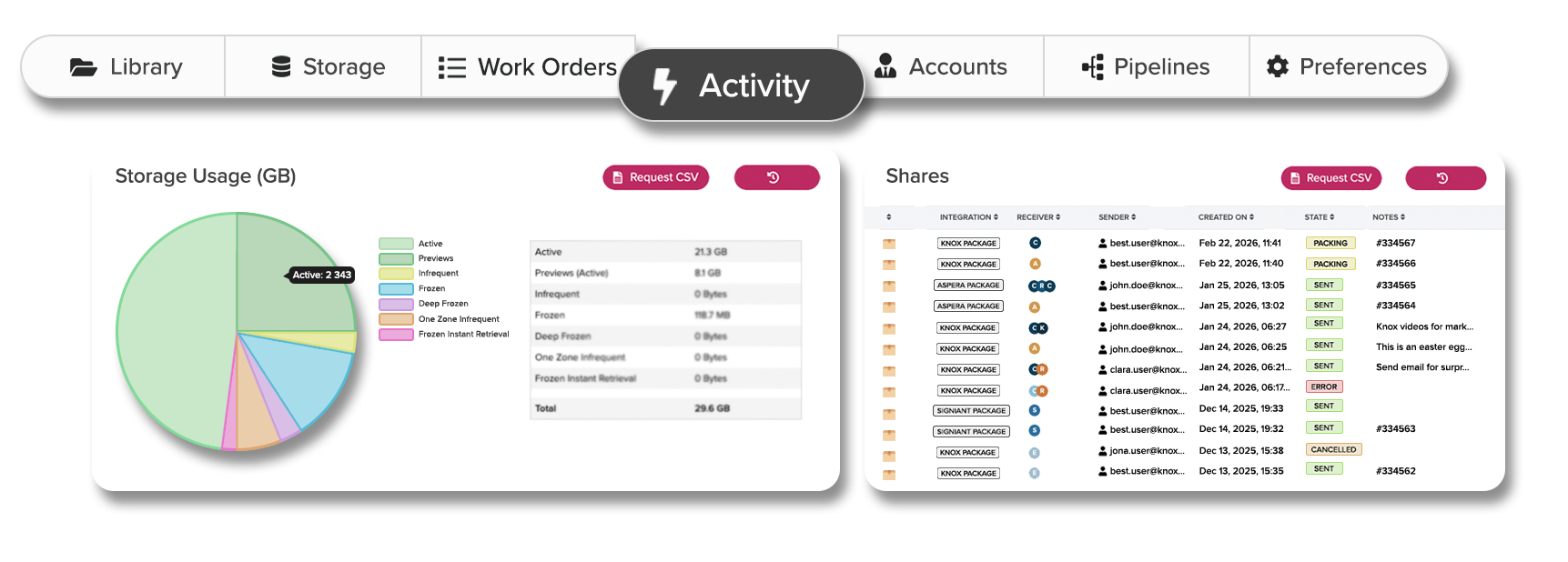
Knox Media Hub provides granular pricing on every single operation, giving you more detail than a local server ever could. Our clients find that this transparency allows them to detect inefficiencies and quantify exact costs per project, turning a "black box" expense into a strategic advantage.
2️⃣
Myth #2: Cloud MAM is Not Secure
Security Protocols in Cloud Systems 🔐
Security concerns are understandable, but the reality is that physical proximity does not equal security. In fact, major cloud providers now invest billions annually in security infrastructure, levels that no private data center can match.
First-class modern Cloud MAM platforms implement advanced measures such as:
End-to-end encryption
Multi-factor authentication
Role-based access control
These features ensure that media assets remain protected at all times. Cloud providers adhere to global compliance standards, making Cloud Media Asset Management safer than many in-house solutions.
3️⃣
Myth #3: Performance is Slower in the Cloud
We’ve heard it multiple times:
"Latency Makes Time-Sensitive Ops Impossible"
The fear that the "internet bottleneck" will stall real-time operations or add prohibitive latency is very real, but it’s based on networking infrastructure from five years ago, not today.
The truth is that in 2026, the gap between local and cloud has vanished.
Cloud MAM systems leverage Content Delivery Networks (CDNs), edge computing and localized zones to ensure fast performance. This allows users to access media assets with minimal latency.
The Hybrid Workflow 🔀
You can have the best of both worlds.
Keep your highest-performance, extreme-bitrate task, like 8K color grading or real-time local mixing, on local hardware while the Cloud MAM then takes over for what it does best: instantly creating proxies for remote editing, automating distribution to global CDN endpoints, and providing disaster recovery.
This phased, "step-by-step" approach lets you maintain local control where you need it while gaining global speed where you want it.
4️⃣
Myth #4: Migration is Too Complicated
Gone are the days of the "Big Bang" migration where operations halt for months. Modern MAM solutions are built for Agile Migrations.
Transitioning to a Cloud MAM may seem daunting, but with proper planning, it becomes manageable. Best practices include:
Conducting asset audits
Prioritizing critical content
Using phased migration approaches
Tools for a Seamless Transition
Modern platforms offer automated migration tools that simplify the process, reducing downtime and risk. Also, you don’t have to move your entire archive overnight. Many organizations start by migrating their "active" supply chain or a single department. Because systems like Knox Media Hub are browser-based and API-first, they can sit alongside your existing legacy systems, allowing for a phased transition that doesn't disrupt daily output.
5️⃣
Myth #5: Cloud Comes with Unexpected Costs
👉 The Egress Trap is Avoidable
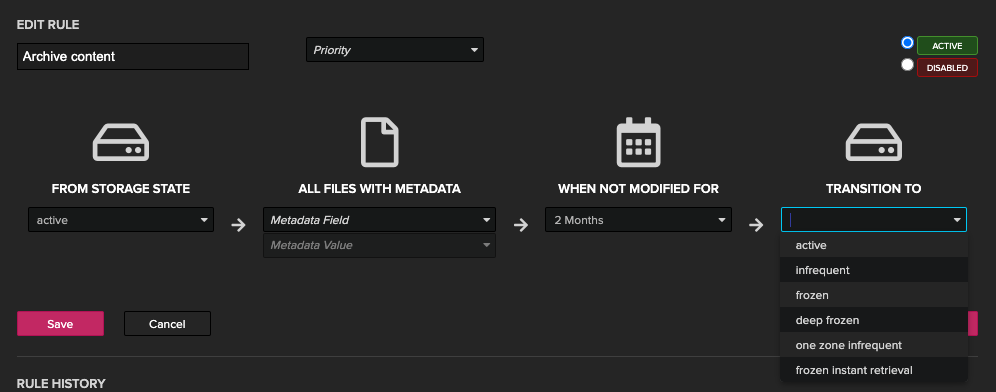
A good cloud MAM should give you automatic and customizable control of storage layers
You’ve likely heard the horror stories of surprise bills from data egress fees. It’s a valid concern: the 2025 Wasabi Global Cloud Storage Index found that more than half of companies are exceeding their cloud budgets, often due to complex tiering and hidden API fees.
The solution isn't staying on-prem; it's using a system that gives you automatic control. Smart MAMs auto-tier data between "hot" and "cold" storage based on rules, providing predictable utility pricing rather than a financial gamble.
Modern SaaS models provide predictable pricing and smart orchestration that minimize data movement.
6️⃣
Myth #6: The Cloud is Only for the 'Big Players'
👉 Scalability & Flexible Pricing Models
No, not only large Enterprises benefit. On the contrary, cloud-native platforms democratize these tools.
Cloud MAM solutions are highly scalable, making them ideal for small and medium-sized businesses. Companies can start small and expand as needed.
Subscription-based pricing allows businesses to pay only for what they use, making Cloud Media Asset Management accessible to all.
7️⃣
Myth #7: "Cloud-Washed" Software is the Same as Cloud-Native
This one is important. Not all Media Asset Management systems are created equal. Some legacy vendors take their old on-premise software and "host" it on a virtual machine, calling it "cloud." This is known as "cloud-washing."
A true Cloud MAM is built from the ground up for the internet. This allows for:
Microservices architecture: flexible architecture to fit any use case, and allow for the use of single features.
Auto-updates and upgrades. If the system needs an update, nothing goes down.
AI & Integration: Seamlessly connect tools for a streamlined Media Supply Chain. You can also plug-in AI tools such as automatic tagging and transcription.
Comparison Table
| Feature | On-Prem MAM | Generic Cloud MAM | Knox Media Hub |
|---|---|---|---|
| Deployment Time | Weeks to months | Days | Live in hours |
| Setup Complexity | High (Hardware + IT) | Moderate | Minimal (Cloud-native) |
| Scalability | Limited, hardware bound | Elastic, but restricted | Unlimited, auto-scaling |
| Supply Chain Integration | Partial, often siloed | Basic | End-to-end orchestration |
| Collaboration | Local | Remote | Remote, real-time, global |
| Maintenance | High (Manual updates) | Moderate | Minimal |
| Initial Investment | High (CapEx) | Low (OpEx) | Low (OpEx) |
The Bottom Line
Leveraging the Cloud effectively means moving beyond merely replicating existing workflows and instead reengineering them to take full advantage of cloud capabilities.
Cloud infrastructure provides the scalability and flexibility that local hardware simply cannot. Whether you are looking for a slow, hybrid transition or a full digital transformation, the goal is the same: to stop managing servers and start managing media.
Want to know about Cloud Media Asset Management? Access our Cloud MAM Buyer’s Guides 👇
Want more Media Asset Management insights? Subscribe to our newsletter 📥



FAQ
-
A cloud-based system for storing, organizing, and distributing digital media assets.
-
It removes the need for on-premise infrastructure and enables cloud-based access.
-
Yes, if it uses encryption, access controls, and compliance frameworks.
-
It is the end-to-end process of creating, managing, and distributing media content.
-
Because it unifies Cloud Media Asset Management with a fully integrated Media Supply Chain approach.